AI: what are the borders?
Written by Francesco Carletta
The machine of progress with its unstoppable pace overtakes everything in front of it, often crossing and exceeding the boundaries of its space: this progress, beautiful and agonizing, necessarily brings with it silent and obscure side effects, difficult to understand and analyse. The rapid development of artificial intelligence and its universal accessibility has gained a strong consensus among the digital population; however, a minority has highlighted the risks and potential consequences, in terms of the corruption of morality and the most basic values that are the foundation of human civilization.
In the first analysis, it is possible to witness the importance of highlighting the risks and degeneration of the misuse of the tools offered by artificial intelligence, starting from the analysis of a concrete case occurred in Manchester: Hugh Nelson, a twenty-seven year old, that he was arrested by the police and
sentenced to eighteen years in prison for generating, through artificial intelligence, child pornography images from real photos of minors; The 27-year-old had even encouraged paedophiles to commit rape.
The moral and legal questions that arise from the case analysed above are many; in fact, one is surprised by the simplicity and speed through which anyone can carry out actions contrary to the values of humanity through a click.
In response to these concerns, the first European regulation on artificial intelligence was issued, the so-called "AI act", a legislative measure that puts at the heart of the legislation the right to privacy and confidentiality of users; the databases of artificial intelligence programmes are indeed fed by a large
amount of personal data, whose real protection is often uncertain in the eyes of the registrants.
In addition, through the use of a "combined-disposed" argument it is possible to derive from Article 22 of the GDPR an implicit rule that protects the holder of personal data by making the automated processing of information subject to the expression of an explicit and voluntary consent; however, this law exposes itself to multiple criticisms, as there are many doubts regarding the collection of "consent
of the interested party": how can consent be said to have been collected in cases of web scraping where there is essentially a fishing for information on the web, including personal data?
Secondly, the large corporations in the world of work are increasingly raising concerns about how the world of work will change, as between doubts and uncertainties, AI experts are confident that the way in which work is conceived will change radically. A moral inquiry often shared by major journalistic editorial
offices puts at the centre of concerns the anticipation of the fragmentation of work, the segregation of the individual and the fragmentation of the identity of the worker.
International observers of the world of work are wondering how all those subjects that, in various ways, will be replaced by tools offered by artificial intelligence, as the strong fears reported by computer engineers. According to a study carried out by the Artificial Intelligence Observatory of the School of Management of the Milan Polytechnic, in 2023 the market for artificial intelligence grew by 52% in Italy reaching a value of 760 million euros; Meanwhile, it is estimated that artificial intelligence has a potential for automation of 50% of "equivalent jobs" and therefore by 2034 machines could do the work of 3.8 million Italians.
Artificial intelligence will bring benefits, but also risks for workers and employers, according to an OECD report. The cost-benefit ratio will depend on how AI is regulated and, consequently, deployed in the workplace. In this context, as the OECD report points out, dialogue with the social partners becomes central. The social partners' questionnaires highlight that the main concerns are about reliable AI use, changing skill needs and physical and mental health risks in the workplace.
Ultimately, in the wake of Will Smith’s film "I, Robot" and his question to the robot "Can you create a work of art?" , you are surprised by the speed of artificial intelligence in creating a picture, writing a poem, writing and even singing a song or offering itself as a close listener to the user: In fact, there are more and more cases where AI users use the platform as a "half-friend" or as an "artificial
psychologist".
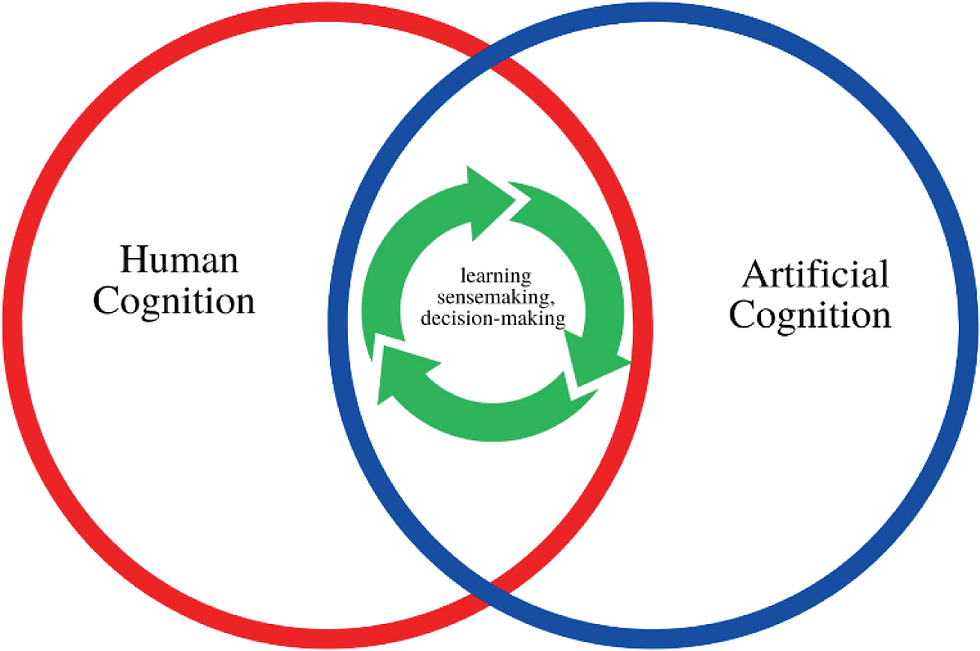
One could still continue to argue about the real meaning of artificial intelligence and its relationship with the human being: as highlighted above, the risks are many, but not to abandon only catastrophic predictions, the opportunities are as; However, the direction that intelligence will take and its use will depend on how political governance will regulate the matter, to prevent, once again, an instrument of progress from becoming a tool for the abuse of human dignity, as it happened in Manchester.

Commenti